Abstract
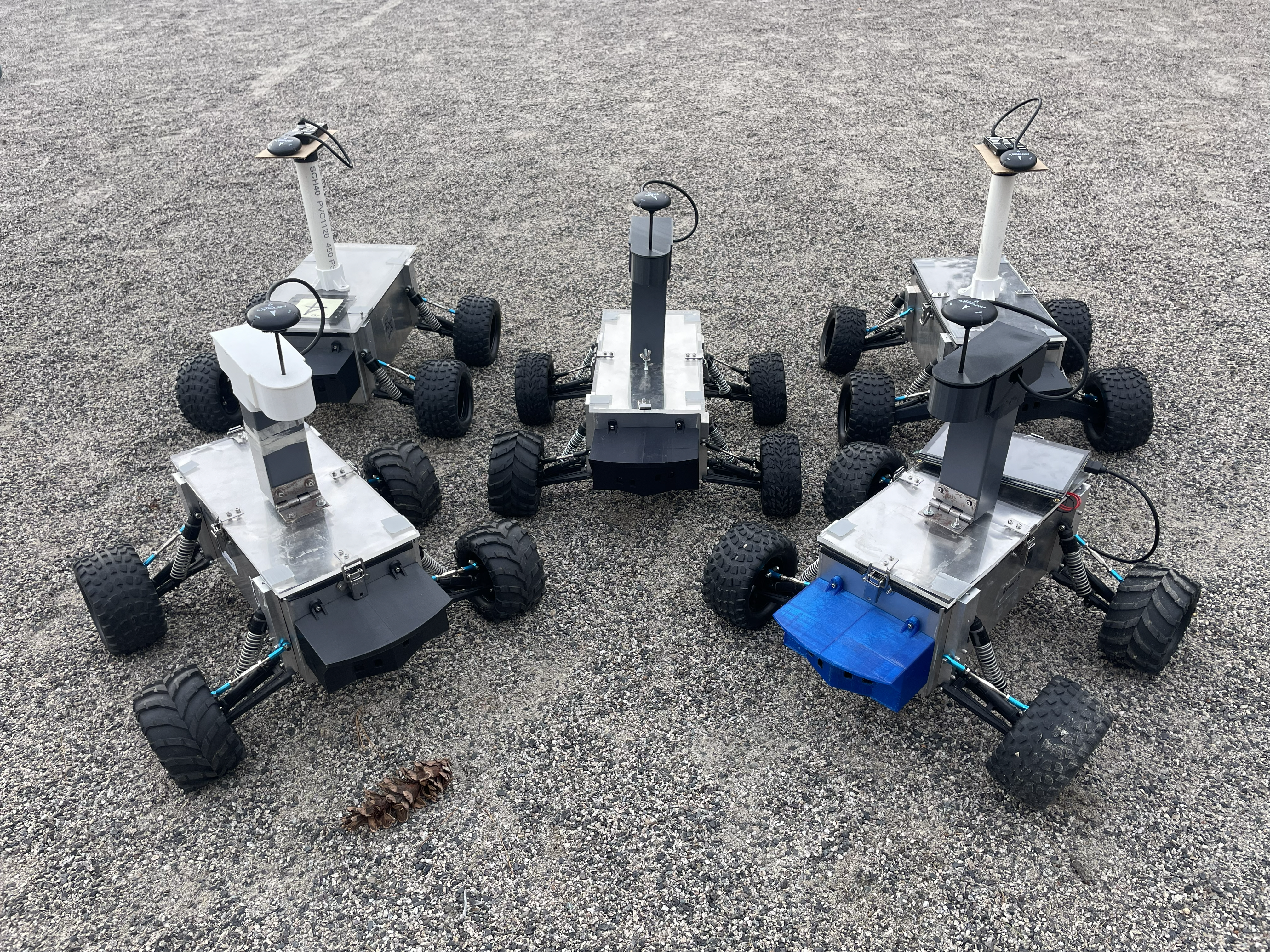
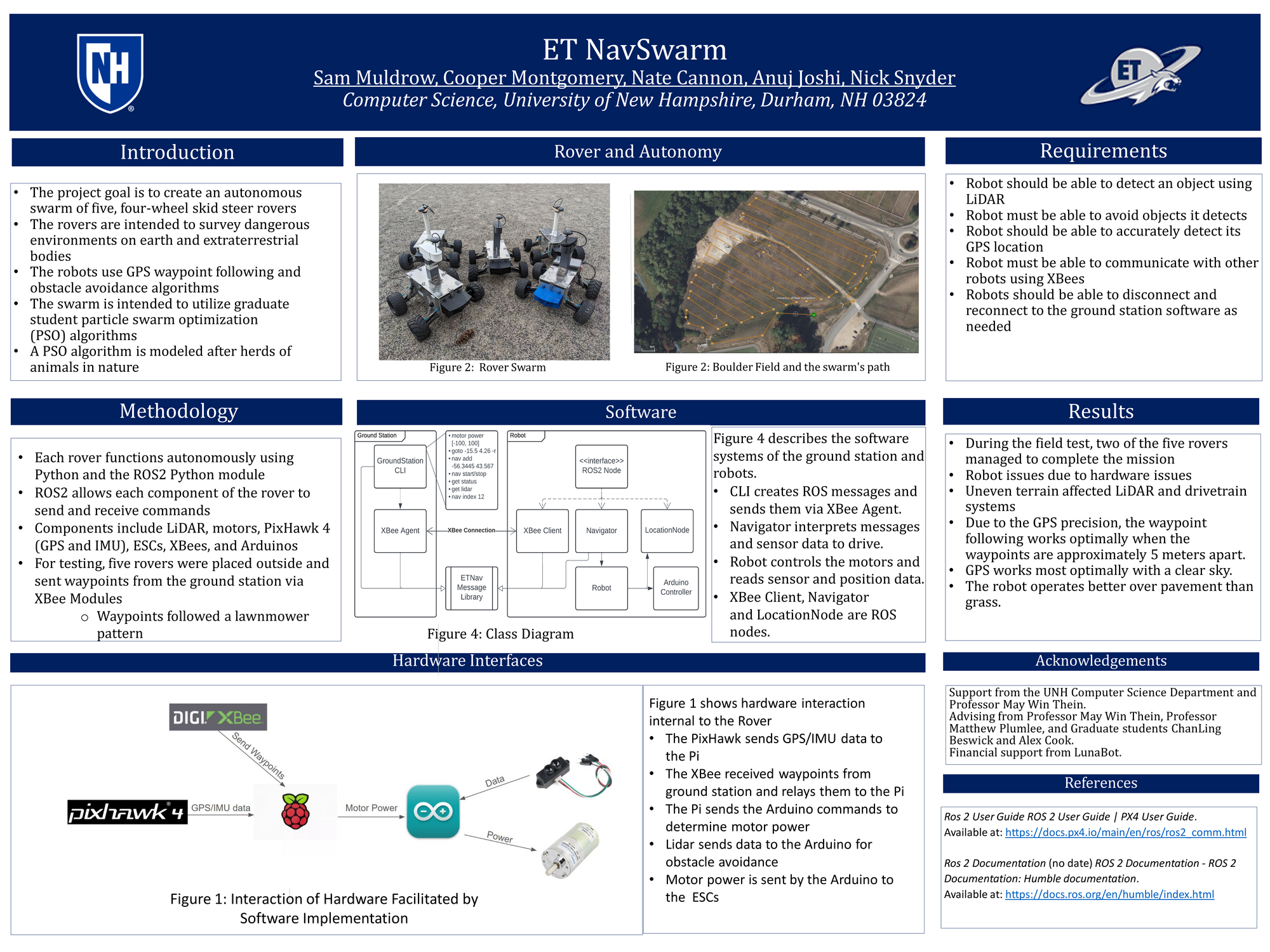
The goal of the ETNavSwarm project is to develop waypoint following and obstacle avoidance algorithms to navigate an autonomous swarm of five, four wheeled skid-steer rovers. These rovers are intended to survey dangerous environments here on Earth as well as extraterrestrial bodies. For the project to be considered a success the swarm of rovers needs to be able to follow waypoints in a lawn mower fashion while avoiding obstacles in a field test. Five out of the five rovers need to stay connected to the swarm for the entirety of the mission. With the waypoint following and obstacle avoidance algorithms graduate students will test particle swarm optimization (PSO) algorithms. A PSO algorithm is designed to mimic herd animals such as buffalo, flocks of birds, and schools of fish. The use of the Robot Operating System (ROS2) in Python is required for the rovers to communicate with one another and their internal hardware. The algorithms are executed by a Raspberry Pi, which facilitates peripheral sensors and hardware, such as LiDAR, motors, GPS, and an IMU. There are two fully functioning rovers, five are set up to function.
Video